
Dwarka Expressway & Sector 99A: How Infrastructure Is Reshaping Gurgaon’s Independent-Floor Market
01 Seotember 2026
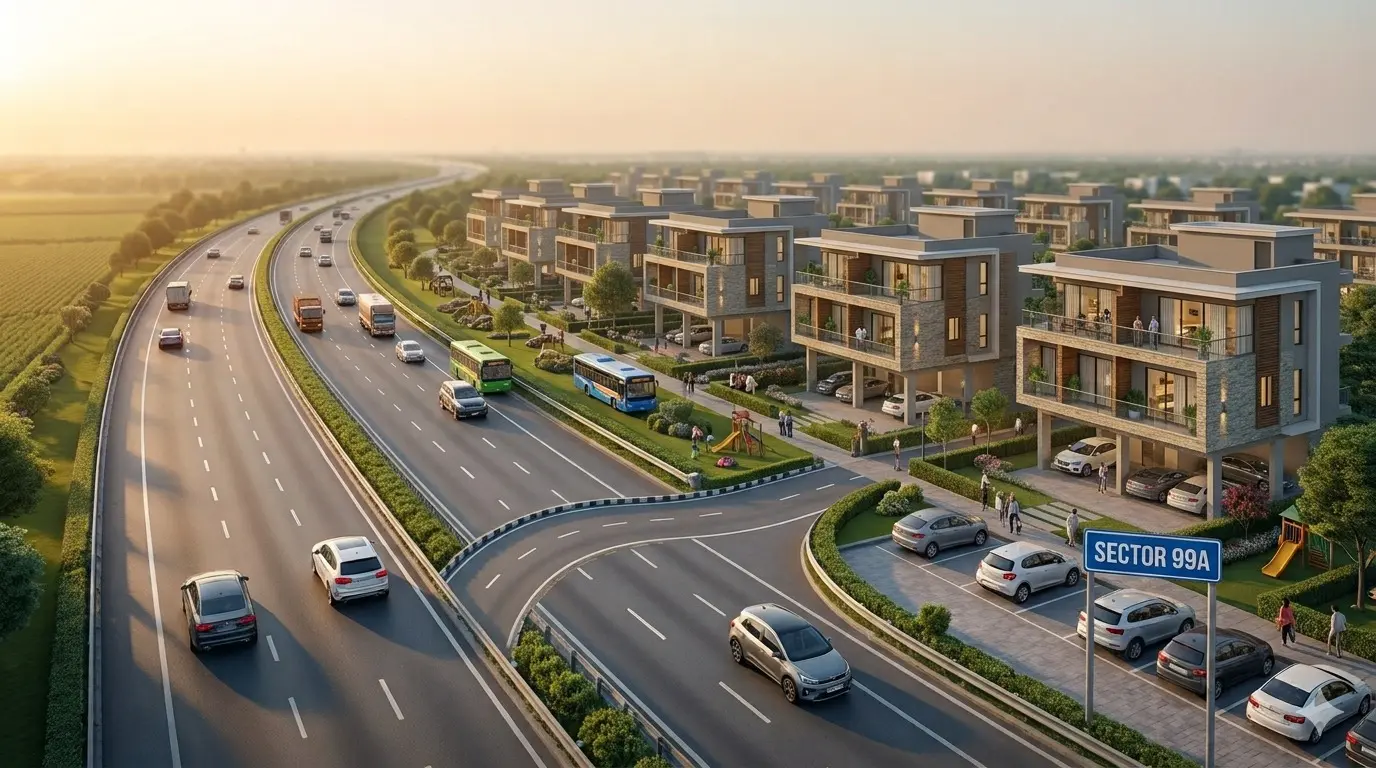
Gurgaon’s real estate landscape has undergone a remarkable transformation over the past decade. What was once largely defined by established residential sectors and commercial hubs has steadily expanded into newer corridors where infrastructure, connectivity and planned urban development are creating the next generation of residential destinations.
Among these emerging locations, Sector 99A, Gurugram, has increasingly attracted attention as part of the larger Dwarka Expressway growth corridor. The evolution of the Dwarka Expressway has changed not only the way people travel between Delhi and Gurgaon, but also how homebuyers evaluate residential property.
Today, buyers are looking beyond merely choosing an apartment in a well-known locality. They are increasingly considering factors such as accessibility, road infrastructure, neighbourhood development, density, privacy, future connectivity and long-term value.
This shift has created an interesting opportunity for independent floors in Gurgaon.
The combination of improved infrastructure and growing residential development is helping redefine the appeal of low-rise living. For buyers who want the privacy and spaciousness of an independent home while still enjoying the conveniences of a planned urban neighbourhood, independent floors can offer a compelling middle ground.
Dwarka Expressway: More Than Just a Road
The Dwarka Expressway has evolved from being an infrastructure project into an important real-estate growth corridor connecting Delhi with Gurugram.
Its significance goes beyond reducing travel distances. Large-scale infrastructure projects often influence the way surrounding areas develop. Improved road connectivity encourages residential communities, commercial establishments, retail destinations, educational institutions and other supporting infrastructure to emerge around the corridor.
That transformation is already visible across the Dwarka Expressway belt, where residential development has accelerated and developers are increasingly investing in large projects. In August 2026, for example, a major residential development agreement covering approximately 10.84 acres was announced along the Dwarka Expressway, reflecting continuing developer interest in the corridor.
For the residential market, this creates a powerful cycle:
Better connectivity → increased accessibility → greater residential interest → supporting infrastructure → stronger neighbourhood appeal.
Sector 99A is positioned to participate in this broader transformation.
Why Sector 99A Is Gaining Attention
Sector 99A enjoys the advantage of being part of the Dwarka Expressway ecosystem while retaining the characteristics of a developing residential sector.
For homebuyers, emerging sectors can offer something that mature neighbourhoods sometimes cannot: the opportunity to become part of a developing urban environment from an earlier stage.
The sector is increasingly surrounded by residential development, road connectivity and supporting amenities. Its proximity to the Dwarka Expressway gives residents access to one of Gurgaon’s most important connectivity corridors, while its location within the wider Gurugram urban framework connects it with established and emerging residential and commercial destinations. This changing environment is influencing the way buyers look at property in Sector 99A.
Today, infrastructure itself has become one of the most important drivers of residential demand. A well-connected road network can reduce commuting friction. Better access to major employment centres can make a neighbourhood more attractive to working professionals. Improved connectivity with Delhi and the airport can increase its appeal to frequent travellers and NRIs.
This is particularly relevant in Gurgaon, where daily commuting patterns are closely linked to employment hubs. For residents, connectivity is not merely about saving minutes. It is about improving the overall quality of everyday life.
A home that provides a comfortable living environment but requires long and inconvenient travel every day may eventually become less attractive than a slightly newer or more spacious home located within a better-connected neighbourhood.
This is one reason why infrastructure-led residential corridors are becoming increasingly important in the NCR property market.
The Rise of Independent Floors in Gurgaon
While high-rise residential developments continue to dominate much of Gurgaon’s modern real estate landscape, another segment is gaining attention: independent floors.
Independent floors offer a different proposition from conventional high-rise apartments.
Instead of living in a large tower with hundreds of families sharing common vertical spaces, residents can enjoy the comparatively low-density character of a low-rise development.
For many families, this represents a more familiar interpretation of home.
An independent floor can provide:
- Greater privacy
- Larger living spaces
- Dedicated parking
- Fewer residences sharing common spaces
- A low-rise neighbourhood environment
- Better separation between residential units
- A greater sense of ownership and exclusivity
The concept is particularly attractive to buyers who appreciate the lifestyle associated with an independent home but do not necessarily want the responsibilities associated with purchasing and maintaining an entire standalone house.
Why Low-Rise Living Is Becoming More Relevant
The pandemic significantly changed the way people think about their homes.
A residence is no longer viewed simply as a place to sleep after work. It has become a workspace, a place for family interaction, a space for relaxation and, increasingly, a long-term lifestyle investment.
As a result, buyers are placing greater importance on usable space, privacy, natural light, ventilation and neighbourhood quality.
This has strengthened the appeal of low-rise residential formats.
For many buyers, an independent floor offers a sense of spaciousness that can be difficult to replicate in conventional apartment configurations.
The appeal becomes even stronger when such homes are located in a well-connected corridor like Dwarka Expressway.
Sector 99A and the Changing Buyer Profile
The buyer profile in emerging Gurgaon corridors is becoming increasingly diverse.
1. End Users
Families looking for a long-term residence are among the most important buyers.
They are generally interested in factors such as schools, healthcare, connectivity, neighbourhood development, parking and the overall liveability of the area.
For these buyers, an independent floor can provide the privacy and space of a larger residence without completely moving away from urban conveniences.
2. Working Professionals
Gurgaon’s employment ecosystem attracts professionals from across Delhi-NCR and other parts of India.
For working professionals, commute time has become a major property-selection criterion.
A well-connected location can therefore significantly influence residential decisions.
3. Investors
Investors often evaluate a property not only on its present value but also on the development potential of its surrounding location.
Infrastructure-led growth can make emerging areas interesting from a long-term perspective, although investors should always evaluate actual project fundamentals, legal approvals, construction quality, developer credibility and market conditions rather than relying solely on future projections.
4. NRIs
For NRIs, connectivity and location are particularly important.
A property located within an established or developing urban corridor can be easier to evaluate as a long-term residential asset, particularly when it offers a combination of modern construction, accessibility and low-density living.
- Infrastructure and Property Appreciation
Infrastructure does not automatically guarantee property appreciation.
However, it can create the conditions that support sustained residential demand.
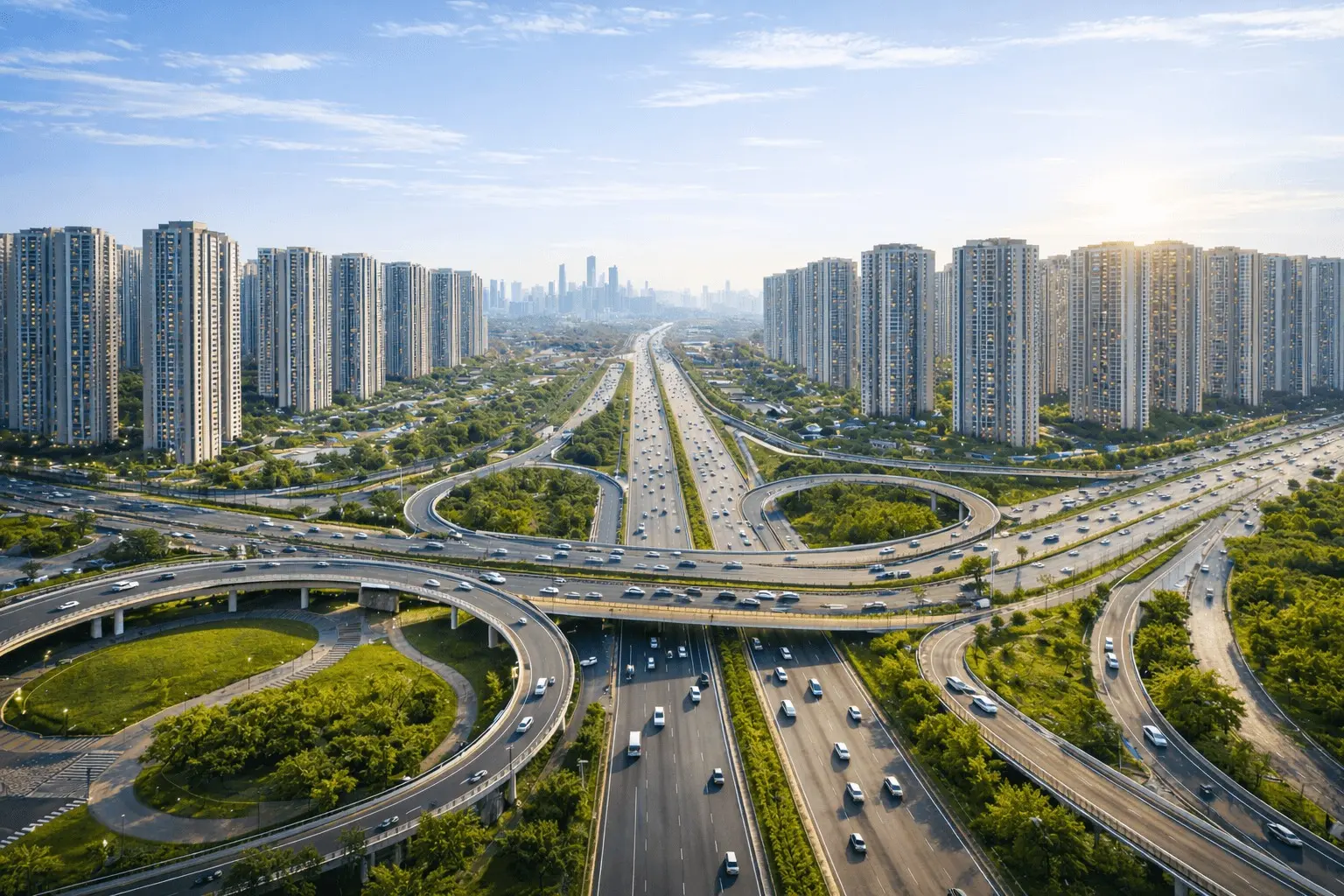
When connectivity improves, the effective catchment area of a neighbourhood expands.
A location that previously seemed distant from Delhi or major employment centres can become significantly more accessible. As more people consider the location viable for daily living, demand for residential property can increase.
This is why infrastructure and real estate are so closely connected.
The impact can also extend beyond the main road itself.
Road improvements encourage commercial activity. Commercial activity attracts employment and services. Services make residential communities more convenient. Greater convenience attracts more residents.
Over time, this can contribute to the formation of a complete neighbourhood.
That is the larger story unfolding across the Dwarka Expressway corridor.
- Beyond Connectivity: The Importance of Social Infrastructure
A successful residential destination cannot depend on roads alone.
Homebuyers today want a complete lifestyle ecosystem.
Schools, hospitals, retail destinations, restaurants, recreational facilities, parks and everyday conveniences all contribute to the liveability of a location.
As residential development increases along the Dwarka Expressway corridor, the supporting ecosystem is also expected to evolve.
For Sector 99A, this creates an important long-term consideration.
The success of the sector will ultimately depend not just on how quickly buildings are constructed, but on how effectively the surrounding neighbourhood develops.
Infrastructure and urban planning therefore need to progress together.
- A New Definition of Premium Living
Premium living is also undergoing a subtle transformation.
Earlier, luxury in Gurgaon was often associated with large high-rise towers, elaborate clubhouses and extensive amenities.
Today, premium living can also mean something much simpler:
- More space. More privacy. Better connectivity. Lower density. Better quality of everyday life.
This is where independent floors occupy an interesting position.
They can offer a premium residential experience without necessarily depending on the scale of a high-rise development.
For families who value privacy over excessive common amenities, this distinction can be meaningful.
The appeal becomes even stronger when the residence is located within a rapidly developing corridor.
What Should Buyers Look for in an Independent Floor?
As demand for independent floors grows, buyers should look beyond brochures and marketing claims.
Before making a purchase, it is important to evaluate:
Location:
How well is the project connected to major roads, employment hubs and essential services?
Developer credibility:
The developer's track record, construction quality and delivery history should be carefully considered.
Legal approvals:
Buyers should verify applicable approvals, registration details and documentation independently.
Construction quality:
Floor planning, materials, fittings, structural quality, ventilation and natural light can significantly affect long-term satisfaction.
Parking:
Dedicated parking is an important advantage for independent-floor buyers and should be clearly understood before purchase.
Neighbourhood development:
Look beyond the project boundary and assess the surrounding infrastructure and existing development.
Long-term liveability:
A good property is not simply one that looks attractive on possession. It should also work for the family's lifestyle several years later.
The Road Ahead for Sector 99A
The future of Sector 99A is closely connected with the continuing evolution of the Dwarka Expressway region.
The corridor is witnessing continued developer activity and strong residential interest. Recent market activity, including significant new residential development announcements and reported sales momentum, indicates that the broader Dwarka Expressway market continues to attract both developers and buyers.
At the same time, Gurgaon remains a city where infrastructure development and urban challenges can coexist. Recent monsoon-related waterlogging across parts of the city is a reminder that future growth must be supported by effective drainage, civic infrastructure and long-term urban planning.
This is an important perspective for buyers.
The strongest residential destinations are not created by one road or one project. They emerge through the combined development of connectivity, civic infrastructure, social amenities, employment opportunities and quality housing.
Sector 99A has the opportunity to benefit from precisely this larger ecosystem.
Conclusion: Infrastructure Is Creating the Next Chapter of Gurgaon’s Residential Market
Gurgaon's real estate story is continuously evolving.
From Golf Course Road and MG Road to New Gurgaon and now the Dwarka Expressway corridor, infrastructure has repeatedly played an important role in shaping where people choose to live and invest.
Sector 99A represents another chapter in this evolution.
Its association with the Dwarka Expressway, combined with growing residential development, is changing perceptions of the area and creating new possibilities for homebuyers.
Within this changing landscape, independent floors offer an especially interesting residential proposition.
They bring together the qualities that many modern buyers increasingly value: privacy, space, low-rise living, dedicated parking and a more independent residential experience, while remaining connected to the wider urban ecosystem.
For families seeking a long-term home, professionals looking for better-connected living and investors evaluating emerging residential corridors, the independent-floor segment deserves serious consideration.
The real opportunity may not simply be in owning a home in Sector 99A today. It may be in being part of a neighbourhood whose story is still being written.
And as infrastructure continues to reshape Gurgaon, the future of residential living may increasingly belong not just to taller buildings, but to smarter locations, better connectivity and homes designed around the way people actually want to live.